A community-based Digital Tree Identity system for wildlife-corridor monitoring
Powered by Digital Tree Identity™
We give a standing tree an immediate value for the people who live beside it — no logging, no carbon certificates. A permanent incentive to keep Africa’s wildlife corridors standing.
This is not one forest. It is one of Africa’s most important corridor systems. Landscape figures from Erdwin’s dissertation on the 15 transboundary corridors of KAZA.
Corridors disappear — not because people are bad, but because families need food.
Clearing is a consequence of missing alternatives. So this project does not pay people for conservation. It pays them for monitoring — honest, verifiable, and rewarded the moment the work is done.
This project creates a second source of income — without changing traditional livelihoods.
From one satellite pass to a living local economy.
- 01
Satellite
One high-resolution baseline capture.
- 02
AI Baseline
Millions of crowns detected once. Then the AI steps back.
- 03
Digital Tree Identity
Each tree becomes a permanent, verifiable record.
- 04
Random Selection
Each quarter, unpredictable reference trees.
- 05
Community Validation
A neighbour walks to the tree and photographs it.
- 06
Blockchain Verification
Tamper-proof, transparent, auditable.
- 07
Smart Contract
The reward is calculated automatically, by difficulty.
- 08
Reward
Value lands directly in a local wallet.
Four taps. No words.
This is the real Porini Trees field app — not a concept. Every screen here is the live interface citizens already use: find the tree, verify it, get paid.
- Go to treeGPS guides to the exact reference tree.
- Take photoOne crown, framed by the app.
- SendQueued offline, synced automatically.
- Reward receivedToken lands in the local wallet.
Live demo — tap through all four steps
Every tree earns a digital identity.
AI maps the forest once, in high resolution. After that, the AI is barely needed. What remains is a permanent record for each tree — like a digital passport — and the blockchain stores its history, not the tree. A life story, tree by tree.
Thousands of these identities compose a Digital Corridor Identity — the real subject of protection.
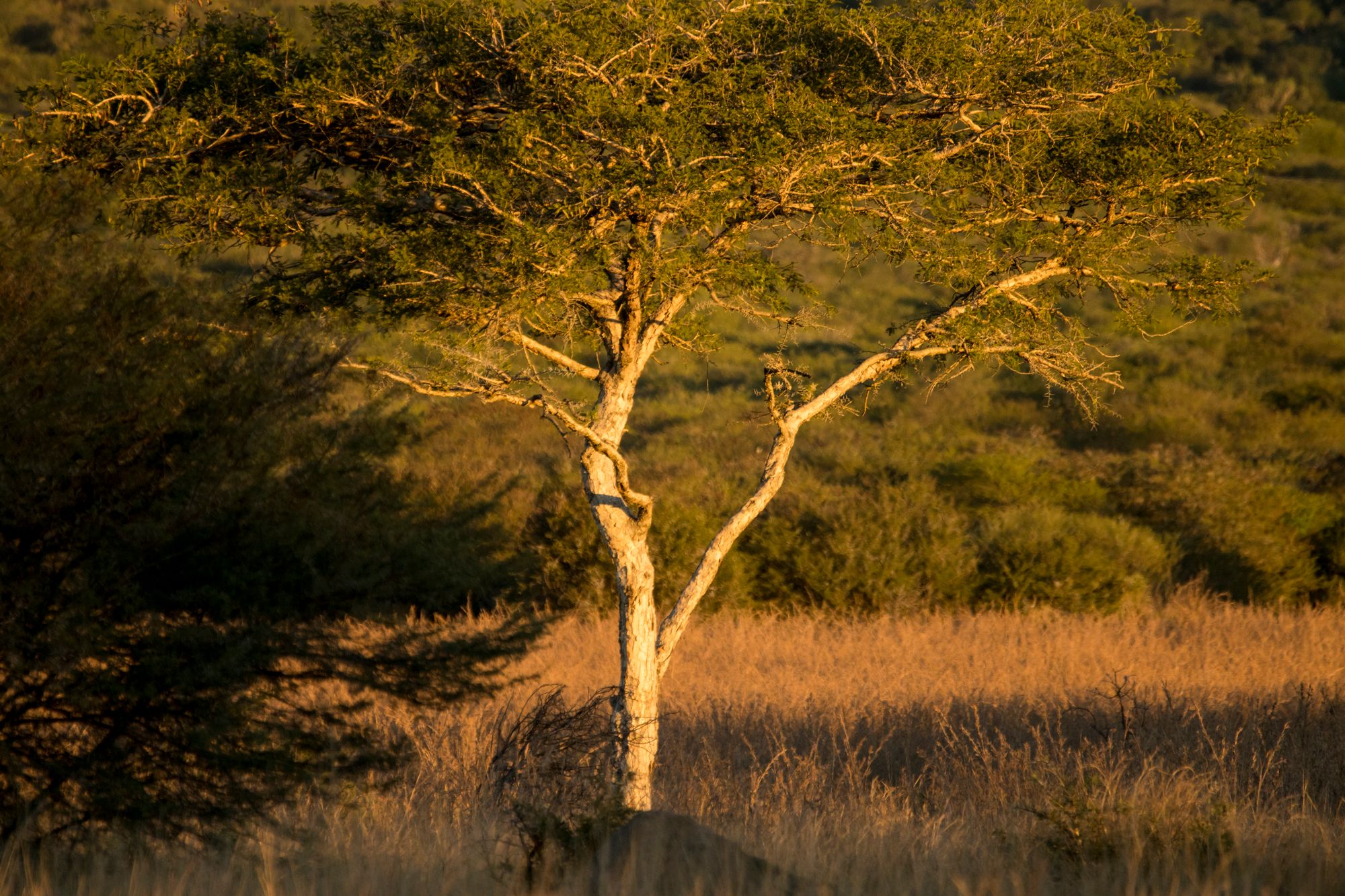
You don’t measure every tree to know the forest. 1,000 random trees represent five million — at 95% statistical confidence.
Random sampling, every quarter.
Each quarter the system picks reference trees at random — 400, 800, 3,000. Nobody knows in advance which. Because they are random, they represent the whole forest. This is the scientific heart of the method.
The project leader sets the intensity.
Different corridors, different intensity. It saves an extraordinary amount of money — without losing scientific weight.
From a single tree to a protected corridor.
The blockchain does not store the tree. It stores its verifiable life story — and binds thousands of them into one Digital Corridor Identity.
Not crypto. A transparent community incentive layer.
On successful validation, the wallet automatically receives a token — for example 1 USD ≈ 20 NAD. The amount is variable: the harder the task, the higher the reward.
Built on a fee-light, ESG-credible chain (e.g. Hedera) — sub-cent micro-payments with an auditable trail, not speculation.
Not every tree costs the same. The system knows.
From distance, density, terrain and season, the reward is calculated automatically — fair to the citizen, efficient for the project.
Community split
Set by the project. Two common shapes:
Community economy
Tokens are redeemed locally — the money stays in the village.
The money stays in Namibia.
Every reward flows from a verified tree straight into the local economy — not to Binance, not to Coinbase, not to Visa.
Everything visible, in one place.
Today's missions
- Open
- Completed
- Reward paid
Forest status
- Trees verified
- Satellite layer
- Health trend
Corridor status
- Confidence
- Monitoring coverage
- Connectivity
Scientific value. This is not a replacement for classical monitoring — it is a statistically validated sampling system that cuts cost dramatically without materially losing rigour.

The same system, for everything nature asks us to watch.
Five funded phases.
- 1Phase 1
Baseline
AI maps every tree once. Each receives a Digital Tree Identity.
- 2Phase 2
Blockchain infrastructure
The transparent incentive layer: wallets, rewards, audit trail.
- 3Phase 3
Community app
Offline, icon-only, built for the field.
- 4Phase 4
Pilot deployment
First corridors monitored by their own communities.
- 5Phase 5
Evaluation
Statistical validation, lessons, and the path to scale.
Funding per phase is set with the partner — the WWF enters figures to its own budget capacity.
Jointly funded by WWF and Porini Foundation.
Not only funding — a substantial part built as our own contribution.
Porini Foundation contributes substantial in-kind development and technical expertise, reducing external funding requirements.
As a result, the bulk of external funding flows into local implementation, community engagement and fieldwork.
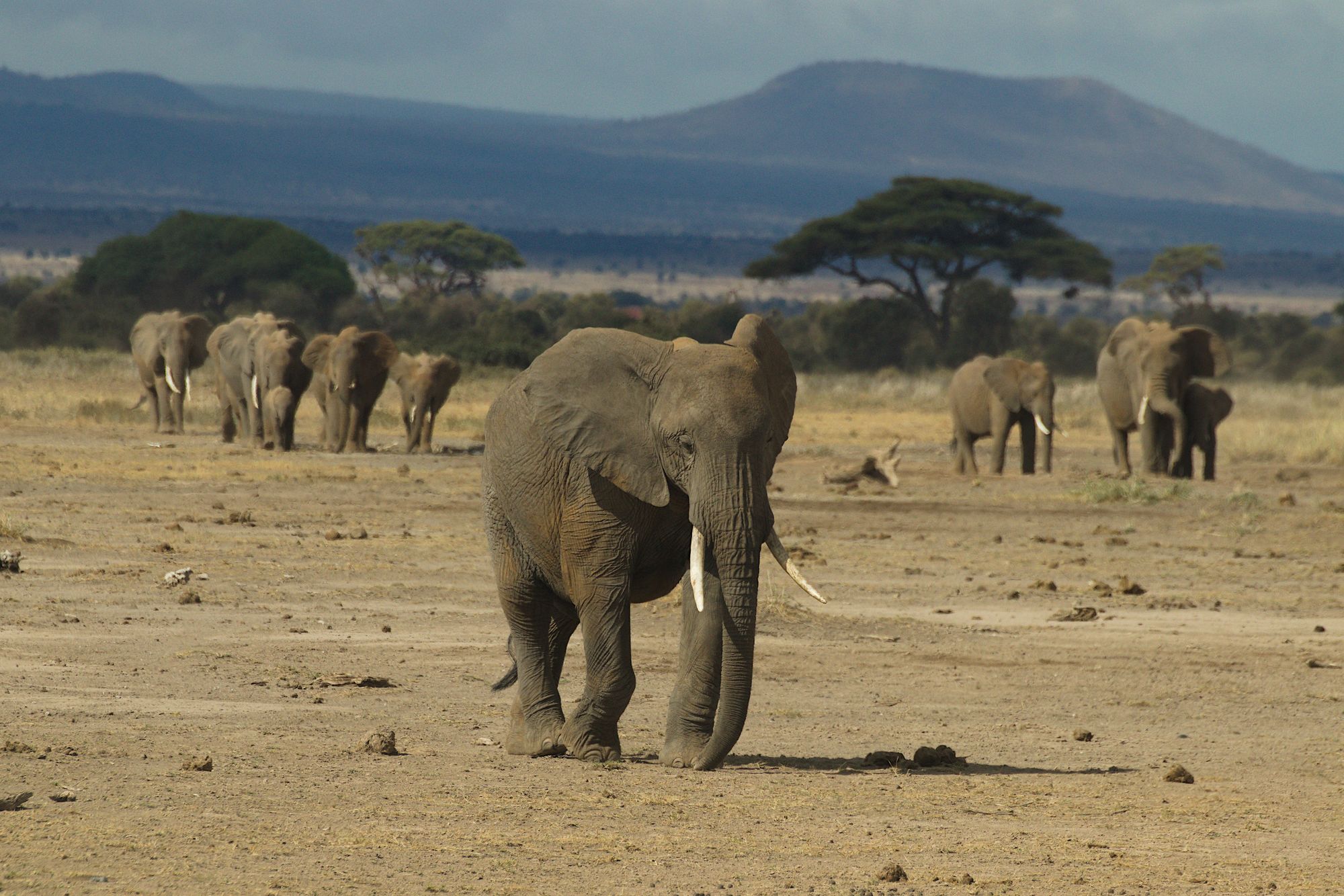
We are not monitoring trees. We are building a new conservation economy around wildlife corridors.
The trees are the reference points. The Digital Tree Identity is the building block of a Digital Corridor Identity — community-owned, scientifically validated, and cheap enough to last.